Masking


Masking

We can help with your specific Masking needs! Contact us if you have any questions. 214-766-4922

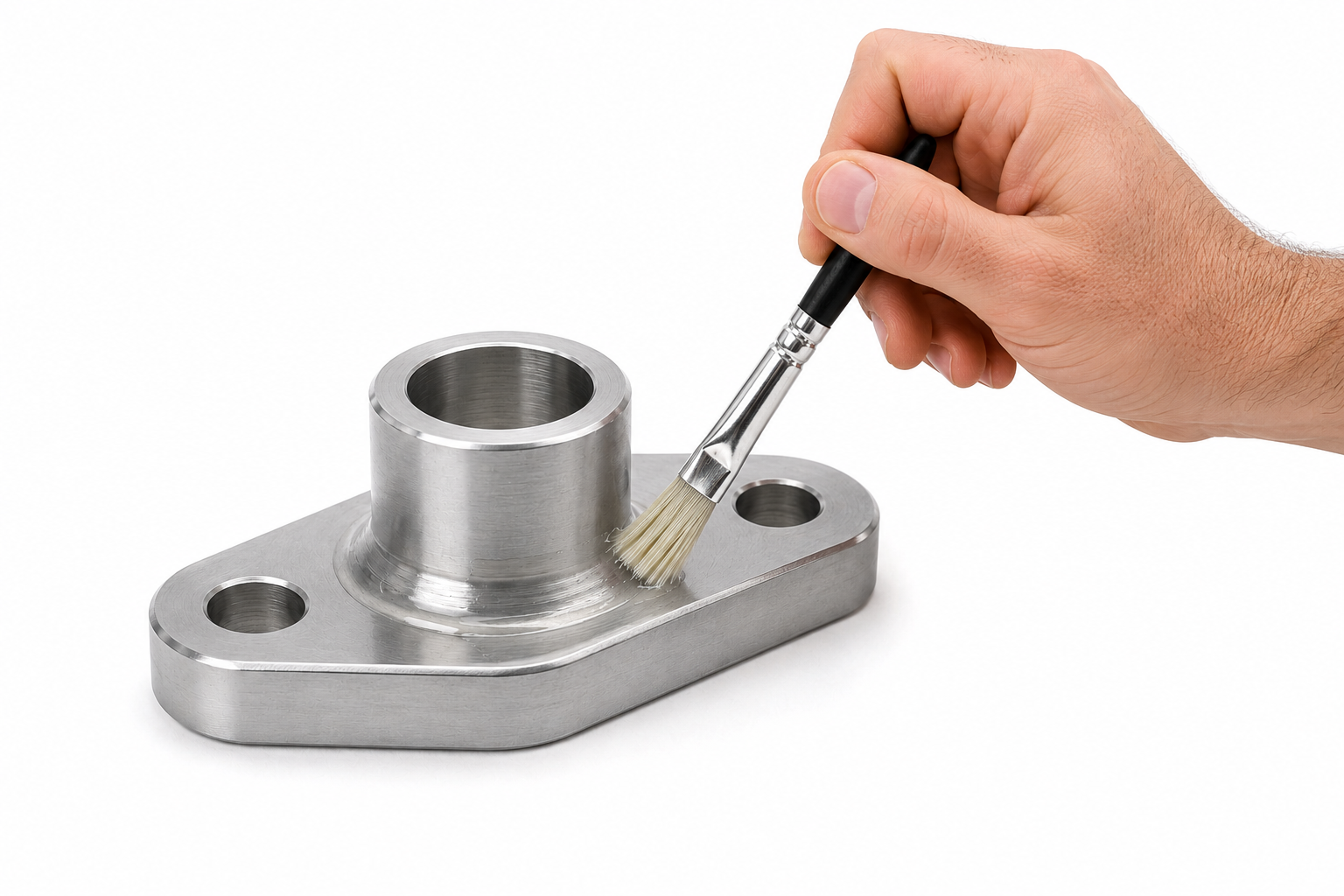
In metal finishing and plating processes, certain areas of a part may need to remain uncoated to maintain proper function, dimensional fit, sealing surfaces, assembly requirements, or electrical contact performance. To protect these surfaces, masking materials such as lacquers, waxes, sealants, tapes, plugs, and caps are applied before processing.


After plating or coating is complete, the masking material must be removed using an appropriate stripper or remover. Proper masking and stripping help ensure coating accuracy, reduce rework, and protect critical part features.
  • Lacquers

    Stop-off lacquers create a chemical-resistant barrier that prevents plating, anodizing, etching, and other process solutions from affecting selected areas of a part. Commonly applied by brushing, spraying, or dipping, they offer precise control over masking locations, helping protect critical surfaces, define coating boundaries, and deliver consistent, repeatable finishing results.

  • Strippers & Reducers

    Strippers and reducers support the application and removal of masking materials used in finishing operations. Strippers help remove cured lacquers, masking compounds, and protective coatings after processing, while reducers are used to thin liquid masking products and adjust viscosity for brushing, spraying, or dipping. Together, they help improve application consistency, simplify cleanup, and support efficient production.

  • Plastisol & Coatings

    Plastisol and protective coatings create a flexible, durable barrier that protects metal components from corrosion, chemicals, abrasion, and impact. They are commonly used on racks, fixtures, baskets, and other equipment exposed to demanding processing environments.

  • Tapes

    Masking tapes provide a quick and reliable way to protect selected areas during plating, anodizing, painting, powder coating, and chemical processing. Available in a variety of materials, adhesive systems, and temperature ratings, they help create clean mask lines while preventing unwanted coating buildup.

  • Seals

    Seals provide an inorganic protective treatment for aluminum alloys that enhances corrosion resistance and helps protect against environmental degradation. Commonly used as a post-treatment in finishing operations, they improve the long-term durability and performance of aluminum components.

  • Waxes

    Masking waxes provide durable selective stop-off protection for complex geometries, sharp edges, and difficult-to-mask areas during demanding plating operations. Their excellent adhesion, crack-resistant performance, and rapid hardening make them ideal for applications requiring reliable masking in hard chrome, copper, silver, indium, lead, and other metal finishing processes. Commonly applied through heated dip-tank methods, they help deliver consistent, repeatable results while minimizing preparation time.


Common Questions

  • Which masking product is right for my application?

    The ideal masking solution depends on your process, chemistry, operating temperature, and part geometry. Our team can help recommend the best product for your application.

  • What processes are masking products used for?

    Masking products are commonly used in plating, anodizing, etching, painting, powder coating, and other finishing operations to protect selected areas from treatment.

  • How do I choose between masking lacquer and masking wax?

    Lacquers are ideal for precise masking and detailed coverage, while waxes are often preferred for complex geometries, sharp edges, and selective stop-off applications. Contact us and we can walk through it together!

  • Can masking products withstand harsh process chemicals?

    Yes. Masking materials are formulated to resist many plating solutions, acids, alkalis, and other finishing chemistries when properly selected for the application.

  • What areas of a part are typically masked?

    Threads, sealing surfaces, bearing areas, electrical contact points, and other critical features are commonly masked to prevent unwanted coating deposition.

  • Are VOC-free masking products available?

    Yes. We offer VOC-free masking solutions for select finishing applications. Our team can help identify a product that meets your performance and environmental requirements.